
A tax due deadline is the one date that decides whether everything is smooth or suddenly stressful. Once the tax return dates are clear, planning becomes easier and the pressure disappears.
This guide walks through everything in a direct, simple way so there is no confusion when the next tax due deadline arrives.
When Is the Tax Due Deadline for Individuals?
For most individuals in the United States, the tax due deadline is April 15. If that date falls on a weekend or holiday, the tax day due shifts to the next business day.
People usually ask:
- when is the deadline to file taxes
- when does tax season end
- when is are taxes due
Tax season normally starts in late January when returns begin processing. It ends on the April tax due deadline unless an extension is filed.
That April date is the official tax return deadline for filing and paying any amount owed.
What Happens If the Tax Due Deadline Is Missed?
Missing the tax due deadline triggers penalties. It does not matter whether it was one day late or one month late.
Here is what typically happens:
- Late filing penalty begins
- Late payment penalty starts accumulating
- Interest is added daily
When Is the Tax Due Deadline for Businesses?
Business structures have different filing dates, and knowing the right tax due deadline is critical.
Common Business Tax Return Dates
- Partnerships and S Corporations usually file by March 15
- Corporations typically file by April 15
- Sole proprietors follow the individual tax return deadline
Each structure has its own taxation deadline, and missing it can lead to penalties per partner or shareholder.
Businesses often feel the impact more heavily because compliance history affects financing, investors, and credibility.
Can the Tax Due Deadline Be Extended?
Yes, but there is an important detail.
To file tax extension means more time to file paperwork, not more time to pay.
The filing tax return deadline can move from April to October if the extension is approved. However:
- Payment is still required by the April tax due deadline
- Interest begins immediately on unpaid balances
Many taxpayers believe choosing to extend tax deadline removes payment pressure. It does not.
When Does Tax Season End?
This is one of the most searched questions online: when does tax season end.
Tax season ends on the April tax due deadline unless an extension has been properly filed.
After that:
- Standard filing closes
- Late penalties begin
- Only extension filers continue until October
That is why understanding the tax due deadline early in the year makes a difference.
Understanding Quarterly Tax Return Dates
For individuals and businesses that do not have taxes withheld automatically, quarterly estimated payments are required.
Typical tax return dates for estimated payments:
- April 15
- June 15
- September 15
- January 15 of the following year
Missing quarterly deadlines increases what is owed by the annual tax due deadline and may add underpayment penalties.
Special Deadlines Like the ERC Credit Deadline
Certain programs also carry strict timelines.
The erc credit deadline applies to businesses claiming the Employee Retention Credit. Claims must generally be filed within three years of the original return date.
That window closes quickly. Just like the tax due deadline, once it passes, opportunities are lost.
Why the Tax Due Deadline Affects More Than Just Taxes
The tax due deadline impacts more than government paperwork.
It affects:
- Loan approvals
- Mortgage applications
- Business funding
- Government compliance standing
- Financial reputation
Banks often request copies of filed returns. Filing after the tax due deadline may slow down major financial decisions.
Filing Early vs Waiting Until the Last Day Tax Limit
There is a clear difference between early filing and waiting until the last day tax limit.
Filing early means:
- Faster refunds
- Time to fix errors
- Less stress
Waiting until the last day to do taxes means:
- Higher risk of mistakes
- Possible system delays
- Limited time to correct errors
There is rarely a benefit to pushing everything toward the tax due deadline.
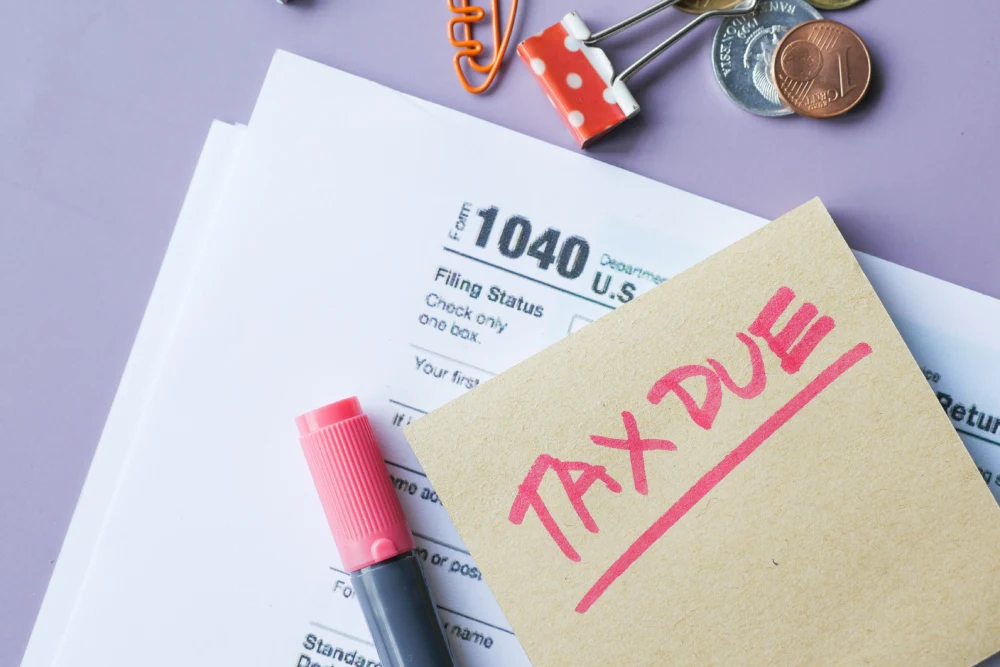
Common Mistakes Before the Tax Due Deadline
Waiting for the Last Minute
- Missing forms
- Incorrect income reporting
- Rushed calculations
Confusing Extension With Payment Relief
- Payment still due in April
- Interest builds immediately
Ignoring Estimated Payments
- Underpayment penalties
- Larger balance at annual filing
Each of these mistakes becomes costly once the tax due deadline passes.
What If the Tax Due Deadline Falls on a Holiday?
If April 15 falls on a weekend or federal holiday, the tax day due moves to the next business day. The IRS announces official changes to the taxation deadline each year. Checking exact tax return dates annually prevents confusion.
Clear Timeline to Stay Ahead of the Tax Due Deadline
January
- Collect W 2 and 1099 forms
- Organize expense records
February
- Review deductions
- Confirm income totals
March
- Prepare draft return
- Calculate expected balance
Early April
- Submit payment
- File before the tax due deadline
Planning month by month prevents last-minute panic.
Conclusion:
The tax due deadline is predictable. It comes every year. The stress around it usually comes from waiting too long.
Understanding when is the deadline to file taxes, knowing the correct tax return deadline, and avoiding the rush of the last day to do taxes makes the entire process manageable.
Taxes are not about guessing. They are about timing. Respect the tax due deadline, prepare early, and the entire process becomes simpler.
Frequently Asked Questions
When is the tax due deadline for most individuals?
The tax due deadline for most individuals is April 15 each year. It shifts to the next business day if on a weekend or holiday.
When is the last day to file your taxes without penalties?
The when is the last day to file your taxes answer is the April tax due deadline. File and pay then to skip penalties and interest.
Can someone extend tax deadline beyond April?
Yes, file an extension form to extend tax deadline to October. Pay by April anyway to avoid extra fees.
What happens after the tax return deadline passes?
After the tax return deadline passes, penalties and interest start right away. They add up fast each month.
When does tax season end officially?
Many ask when does tax season end. It ends on the April tax due deadline unless extended.
Is the last day to do taxes always April 15?
The last day to do taxes is usually April 15. It moves if on a weekend or holiday.
What are the quarterly tax return dates?
Quarterly tax return dates hit April, June, September, and January. They spread payments yearly.
What is the ERC credit deadline for businesses?
The ERC credit deadline lets businesses amend returns in three years. Claims process after main dates.
When are taxes due if someone owes money?
If taxes owed, pay by April tax due deadline. Extensions don’t delay payment.
Why is the tax due deadline so important?
The tax due deadline matters because missing it brings penalties, interest, and trouble. It hits finances hard.